
How Stress Affects Gut Health (And Why Your Digestion Feels Off)
Have you ever noticed your digestion feels different when you’re stressed?
(I know I definitely do.)
More bloating.
A change in bowel habits.
More cravings.
Feeling uncomfortable after meals.
It’s easy to assume it’s something you’ve eaten.
But often, it’s not just the food.
It’s stress — and the way stress affects gut health is often underestimated.
The Gut–Brain Connection: Why Stress Affects Gut Health
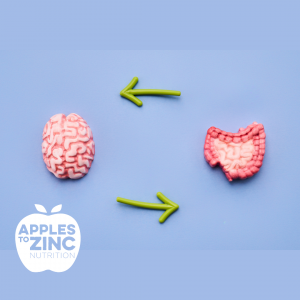
Your gut and brain are in constant communication through something called the Gut–brain axis.
This two-way system links your nervous system and digestive system, with signals travelling via hormones and the Vagus nerve.
You’ve likely experienced this in real life.
Think about when you feel nervous before a presentation or excited about something — that “butterfly” feeling in your stomach.
That’s a direct example of how stress affects gut health.
Your brain is activating a stress response, shifting blood flow away from digestion and towards your muscles and heart.
And importantly…
Your body can’t be in “stress mode” and “digest mode” at the same time.
BUT, when stress becomes ongoing (which is unfortunately very common in our lives these days), cortisol stays elevated — and this is where it begins to affect other areas of your health.
What Happens To Your Gut When You're Stressed
When your body is under stress, it activates a “fight or flight” response.
Helpful in the short term.
But when it becomes ongoing, this is where stress affects gut health more significantly.
1. Reduced Digestive Function
Stress can reduce:
- Stomach acid
- Digestive enzymes
- Bile production
All of which are essential for breaking down food properly.
This may lead to:

Motility refers to how quickly food moves through your digestive system.
Stress can:
- Slow it down → constipation
- Speed it up → looser stools
This is another key way stress affects gut health and contributes to that feeling of unpredictability.
3. Impact on Your Gut Microbiome
Your gut is home to trillions of bacteria — known as your microbiome.
These bacteria play a vital role in:
- Digestion
- Immune function
- Mood
- Inflammation
Chronic stress can:
- Reduce beneficial bacteria
- Lower microbial diversity
- Increase inflammation
So stress doesn’t just affect how your gut feels — it changes how it functions at a deeper level.
Stress, Appetite & Cravings
Another important way stress affects gut health is through appetite and eating patterns.
You might notice:
- Cravings for sugar or refined carbohydrates
- Eating more (or less) than usual
- Reaching for quick energy after a stressful day
 This is linked to changes in blood sugar and stress hormones.
And it’s important to say:
This is not about willpower. It’s physiology.
This is also why I often focus on stress management when working with clients on weight loss and hormone balance
Why Your Gut Feels "Off" When You Are Stressed
When you bring all of this together, it becomes much clearer why your digestion can feel so different from one day to the next.
You might normally tolerate certain foods well…
But on a stressful day, they suddenly don’t sit right.
That’s because stress affects gut health in multiple ways at once:
- Nervous system changes
- Slower (or faster) digestion
- Changes in gut bacteria
- Altered appetite and eating patterns
All responding to your current stress load.
What Can Help Support Your Gut When You Are Stressed
 You don’t need to eliminate stress completely (which clearly isn’t realistic anyway).
But you can support your body’s response to it.
Start with simple, consistent foundations:
 Eat regular meals to support blood sugar Slow down when eating (even slightly helps) Include a variety of protin and fibre-rich foods Prioritise sleep where you can Build in small moments of calm each day
This might be:
- A short walk
- Reading
- Deep breathing
- Sitting quietly with a cup of tea
These small changes help shift your body back towards a “rest and digest” state.
What This Means For You
If your gut feels more unpredictable when you’re stressed…
That’s not random.
It’s a reflection of how stress affects gut health and how your body is responding to its environment.
And when you support that environment — particularly by reducing stress — digestion often improves too.
If You’d Like Support
If you’re dealing with bloating, unpredictable digestion or feel like your gut just isn’t quite right, I can help you understand what might be driving it.
You can book a free, no-obligation call : book here
We can explore what’s going on and whether tailored nutritional support could help.

You don’t have to figure it out on your own.
Janet 