Eating Less But Not Losing Weight? Here's Why Eating Less Isn't Always the Answer
Have you ever found yourself saying...
"I'm eating less than I ever have... so why am I still not losing weight?"
I honestly can't tell you how many times I've heard that in clinic.
Women come to me feeling frustrated, confused and often quite defeated.
They tell me they're skipping breakfast because they're "being good." They're having a salad for lunch. Trying not to snack. Having tiny portions at dinner...
Yet somehow the scales refuse to budge.
Naturally, the next thought is...
"Maybe I just need to eat even less and exercise more."
But what if eating less isn't actually the problem?
Now before I go any further, I want to be really clear.
Creating a calorie deficit is necessary for weight loss. There is good scientific evidence that if we consistently consume more energy than we burn, we gain weight, and if we consume less than we burn, we lose weight.
However...
How you create that calorie deficit matters!!
Because constantly eating less isn't always the smartest, healthiest or most sustainable way to lose weight.
In fact, for many women—particularly during their 40s and 50s—it can actually make the journey feel much harder.
You become hungrier.
You think about food all the time.
Your energy dips.
Your workouts suffer.
And eventually, healthy eating begins to feel like hard work rather than something that supports your wellbeing.
As a nutritional therapist, my aim has never been to help women simply eat as little as possible.
It's to help them build a way of eating that supports their metabolism, hormones, energy levels and relationship with food—while still allowing weight loss to happen.
So let's explore seven reasons why eating less isn't always the answer.
1. You May Be Losing Muscle Instead of Fat

One of the biggest mistakes I see women make is cutting calories without thinking about protein or strength training.
When we lose weight, we don't just lose body fat.
We can also lose muscle.
That matters because muscle is metabolically active. It supports movement, strength, balance and healthy ageing, and it contributes to the amount of energy your body uses each day.
From our 30s onwards, women naturally begin to lose muscle mass, and this accelerates during perimenopause and after the menopause as oestrogen levels decline.
If you're eating very little—particularly if your protein intake is low—your body has fewer building blocks available to maintain muscle.
That's why I'm far more interested in helping my clients lose fat while preserving muscle, rather than simply seeing a lower number on the scales.
Instead of asking:
"How can I eat less?"
I encourage women to ask:
"How can I nourish my body better?"
One of the simplest ways to do this is to include a source of protein every time you eat and combine this with some form of resistance exercise each week. You can find out the protein content of many foods by checking out my protein guide
2. Eating Too Little Often Makes You Hungrier
Have you ever managed to "be good" all day...
Only to find yourself standing in the kitchen at 9pm eating biscuits, chocolate or whatever you can find?
You're not weak.....You're human.
When we consistently under-eat, the body responds by increasing hunger signals.
At the same time, energy levels often fall and cravings become stronger.
From an evolutionary perspective, this makes perfect sense.
Your body doesn't know you're trying to fit into a smaller pair of jeans.
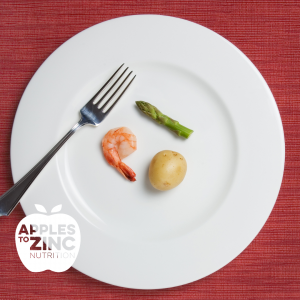
It simply thinks food has become scarce and starts encouraging you to eat.
That's why many women describe feeling like they have no willpower in the evening. The reality is that lack of willpower isn't the issue.
Biology is.
One of the biggest breakthroughs many of my clients experience is when they start eating enough during the day.
Regular meals that contain protein, fibre and healthy fats can help support more stable blood sugar levels, improve fullness and reduce those overwhelming evening cravings.
Ironically, eating a little more at breakfast and lunch often makes it much easier to eat a little less in the evening.
3. Eating Less Can Take Up Too Much Head Space
 This is something that isn't talked about nearly enough.
When you're constantly trying to eat less, food can start to dominate your thoughts.
--> Can I eat that?
--> Have I had too many calories?
--> Should I skip lunch because I had cake yesterday?
--> I'll be "good" today and start again on Monday.
Sound familiar?
Healthy eating should support your life and it most definitely should NOT become your life.
I've worked with women who know the calorie content of almost every food but have completely lost trust in their own hunger and fullness signals.
They're exhausted—not because of the food itself, but because of the mental energy they're spending thinking about it.
I want women to have more headspace, not less. To enjoy meals, to go out with friends without anxiety and to trust their bodies again.
Because sustainable nutrition isn't about being perfect.
It's about finding a way of eating that feels realistic enough to continue for years—not just until your next holiday.
4. Blood Sugar Balance Matters More Than You Think
Many women think weight loss is simply about calories.
Calories absolutely matter but they're not the whole story.
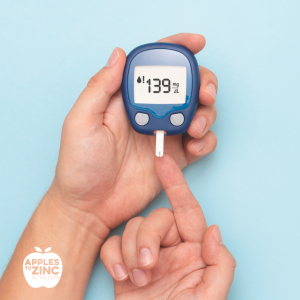
What you eat also influences your blood sugar.
Meals that are very low in protein and fibre—or long gaps between meals—can make blood sugar less stable.
This can lead to:
- Mid-afternoon energy slumps
- Increased cravings
- Feeling shaky or irritable
- Wanting sugary foods for a quick boost
When blood sugar is more stable, many women notice they naturally feel fuller, have steadier energy and make food choices more easily.
That's one of the reasons I often recommend building meals around:
✔ Protein
✔ Vegetables
✔ Fibre-rich carbohydrates
✔ Healthy fats
rather than simply trying to make every meal smaller.
5. Eating Too Little Can Increase Your Body's Stress
When we hear the word "stress", we usually think about work deadlines, family pressures or trying to juggle too many things at once.
But your body doesn't only respond to emotional stress.
It also responds to physical stress.
And consistently eating too little can be one of those physical stressors.
When food intake is very low for a prolonged period, your body starts making adaptations to help protect itself. This is a completely normal survival response.
You might notice:
- Feeling colder than usual
- Lower energy levels
- Feeling tired during the day
- Needing more caffeine to keep going
- Thinking about food more often
At the same time, chronic life stress can make healthy eating harder by affecting appetite, sleep quality, food choices and motivation to exercise.
This is why, when I work with women, we don't just talk about calories.
We also look at sleep, stress, movement and daily routines because they all influence how easy it feels to lose weight and maintain healthy habits.
If stress is a big part of your life, you might enjoy reading my blog on how stress affects your hormones and how stress affects gut health, because both can play a role in how you feel day to day.
6. Weight Shouldn't Mean Feeling Miserable
One of the saddest things I hear from women is this:
"I know how to lose weight... I just can't live like that forever."
If your plan relies on constantly saying "no"...
If you're hungry most of the day...
If you're avoiding meals out...
If you're counting every calorie...
Then it's probably not a long-term solution.
Healthy eating shouldn't feel like a punishment and a healthy eating plan shouldn't have an expiry on it either.
It should give you more energy, help you sleep better, improve your concentration and leave you feeling satisfied after meals.
Of course, there will be times when you choose to have a little less or make different choices and that is fine. But there is a huge difference between being mindful and being miserable.
One of my goals as a nutritionist is to help women enjoy food again.
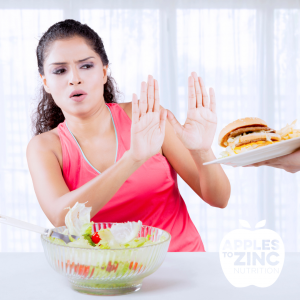
Because food isn't just fuel.
♥ It's family dinners.
♥ Birthday cake.
♥ Coffee with friends.
♥ Sunday roast.
♥ Celebrations.
♥ Comfort.
♥ Culture.
Weight loss should fit around your life—not ask you to stop living it.
7. Nourishment Matters More Than Eating Less Calories
This is probably the biggest shift I try to help my clients make.
Instead of asking:
"How can I eat less?"
I encourage them to ask:
"How can I nourish my body better?"
Because when your meals contain enough protein, fibre, healthy fats and colourful vegetables, something interesting often happens.
You're naturally fuller.
Your energy becomes more consistent.
Cravings reduce.
Healthy choices become easier.
And eating well starts to feel less like a battle.
Rather than obsessing over eating less, we focus on eating enough of the right things.
For many women, that's a much more enjoyable—and sustainable—way to lose weight.
What I recommend Instead
If you're eating less but not losing weight, my advice is rarely to simply cut your portions even further.
Instead, I encourage women to build strong nutritional foundations.
These include:
✔ Eating enough protein to support muscle and fullness
✔ Including around 30g of fibre each day from vegetables, fruit, beans, pulses and wholegrains
✔ Building meals around real, minimally processed foods
✔ Eating regularly rather than surviving on coffee until lunchtime
✔ Strength training two or three times a week to help maintain muscle
✔ Prioritising sleep wherever possible
✔ Finding realistic ways to manage stress and build resilience
None of those recommendations involve starving yourself. Because sustainable weight loss is rarely about seeing how little you can eat.
If This Resonates With You
If you've been eating less but not losing weight...
Please don't assume you've failed.
Or that your body is "broken."
Or that the only answer is to eat even less.
Sometimes the answer isn't to remove more food.
Sometimes it's to improve the quality of what you're eating, support your body better and build habits that you can actually maintain.
After all, there's little point losing weight on a plan you can't imagine following six months from now.
The women who achieve lasting success are rarely the ones who eat the least.
They're usually the ones who find a way of eating that supports their health, their hormones, their energy and their lifestyle.
If You’d Like Support
Weight loss isn't just about calories.
It's also about understanding you.
Your lifestyle.
Your eating habits.
Your stress levels.
Your sleep.
Your hormones.
Your relationship with food.
That's why nutritional therapy isn't about handing everyone the same meal plan.
It's about creating a personalised approach that works with your body, not against it.
If you're tired of feeling like you're "doing everything right" but still not getting the results you hoped for, I'd love to help.
You can book a free, no-obligation discovery call book here and together we can explore what's really getting in the way.
You don’t have to figure it out on your own.
Sometimes eating slightly less is appropriate.
But eating better is often far more powerful than simply eating less.
And that's the difference between a diet......and a way of eating that genuinely supports your health for years to come.
Janet 