Ultra Processed Foods: What Are They & Are They Bad for You?
Ultra processed foods (UPFs) are rarely out of the headlines. We are told they are damaging our health, that we're eating far too many of them and, sometimes, that we should be avoiding them altogether.
There is a growing body of research linking diets high in ultra-processed foods with poorer health outcomes, so I do think UPFs are something we should be paying attention to.
But that doesn't mean every UPF is bad for us or that we need to eliminate them from our diets.
So, what should we actually be concerned about — and where is it worth making changes?
- What actually is an ultra processed food?
- Why should we be concerned about UPFs?
- Why might diets high in UPFs be a problem?
- Are all UPFs bad for us?
- Should we be trying to eat fewer UPFs?
- Where should you start?
- Should you be reading every ingredient label?
- The bottom line: reduce reliance rather than eliminate
What actually is an ultra-processed food?
Most of the research around ultra-processed food uses a system called NOVA, which groups foods according to the nature, extent and purpose of the processing they have undergone.
At one end are unprocessed or minimally processed foods such as fruit, vegetables, eggs, milk, plain yoghurt, meat, fish, oats and rice.
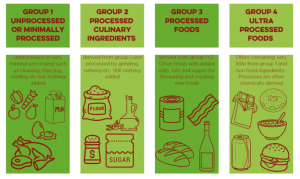
There are then processed culinary ingredients such as oils, butter, sugar and salt, followed by processed foods such as cheese, traditionally made bread and vegetables preserved in brine.
The final category is ultra-processed foods.
These are generally industrial formulations made using several processes and often contain ingredients or additives that wouldn't normally be used when cooking at home. These might include modified starches, flavourings, colours, sweeteners and some emulsifiers.
Typical examples include many soft drinks, confectionery, packaged snacks, instant noodles and ready meals.
But UPFs also turn up in places you might not immediately expect: breads, cereals, yoghurts, sauces, stock cubes, meat alternatives and numerous other everyday foods.
And this is where the conversation starts to get more complicated.
Being classified as ultra processed tells us something about how a food has been produced. It doesn't automatically tell us everything we need to know about the nutritional value of that food.
Why should we be concerned about UPFs?
Because increasingly, the research suggests that diets containing high amounts of UPFs are associated with poorer health.
A large review published in the BMJ in 2024 brought together 45 analyses involving almost 10 million people.
 Across the research, greater exposure to ultra-processed food was associated with a higher risk of a number of adverse health outcomes. Some of the strongest evidence related to cardiovascular disease, type 2 diabetes, common mental health disorders and mortality.
That deserves our attention.
However, much of this research is observational. That means researchers can identify that people eating more UPFs are more likely to experience particular health outcomes, but it is much harder to prove that the UPFs themselves directly caused them.
The quality of the evidence also varies considerably.
That doesn't mean we should dismiss it.
When associations are repeatedly seen across large populations and across a number of different areas of health, I think it gives us good reason to look at how much of our diet is coming from these foods.
We just need to be careful not to turn an association into a claim that every UPF is directly damaging our health.
Why might diets high in UPFs be a problem?
Many UPFs are high in calories, saturated fat, salt or free sugars and low in fibre and other beneficial nutrients.
If these foods make up a large proportion of our diet, they may also start to displace foods we know are beneficial to health — things such as fruit, vegetables, wholegrains, nuts, seeds and pulses.
There may be more to it than that, though.
Some ultra-processed foods are very easy and quick to eat, and research suggests factors such as energy density, texture and eating rate may influence how much we consume.
One particularly interesting controlled study compared an ultra-processed diet with an unprocessed diet.
Despite the meals being designed to provide similar amounts of calories, macronutrients, sugar, sodium and fibre, participants ate around 500 calories more per day during the ultra-processed diet and gained weight. During the unprocessed diet they lost weight
Researchers are also investigating whether the physical structure of foods, particular additives, combinations of ingredients and the processing itself could play a role.
We don't yet know exactly which factors are responsible, and there is unlikely to be one single explanation.
But I think there is enough evidence to say that regularly getting a large proportion of our diet from UPFs is something worth addressing.
Are All UPFs Bad For Us?
This is where I think some of the messaging around UPFs becomes unhelpful.
Rather than asking whether all UPFs are bad, I think a much more useful question is:
Which UPFs are worth paying more attention to?
The NOVA system tells us about processing. It isn't a complete assessment of a food's nutritional quality.
A fizzy drink, chocolate bar, supermarket wholemeal loaf and fortified breakfast cereal could potentially all fall within the ultra-processed category.
That doesn't make them nutritionally equivalent.
A wholemeal loaf may provide fibre, protein, vitamins and minerals and make it much easier to put together a nutritious lunch.
Similarly, a yoghurt containing an additive doesn't suddenly lose the protein, calcium and other nutrients it provides.
At the other end of the spectrum, a diet containing large amounts of confectionery, biscuits, crisps, sugary drinks and certain convenience foods may be providing plenty of energy while offering relatively little fibre or nutritional value.
The amount, type and context matter.
This is why I don't think simply counting how many UPFs you eat is particularly helpful.
Should we be trying to eat fewer UPFs?
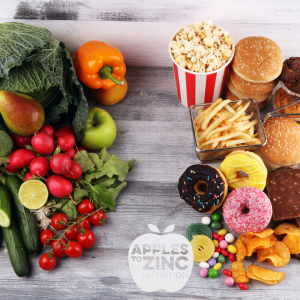 For most of us, I think reducing our reliance on UPFs is a sensible goal.
That is very different from trying to eliminate them.
I'd much rather see someone gradually shift the balance of their diet towards more whole and minimally processed foods than become obsessed with achieving a "UPF-free" diet.
So rather than asking:
"How can I get every UPF out of my diet?"
start by looking at the bigger picture.
Are you regularly eating fruit and vegetables?
Are you getting enough fibre?
Do your meals contain good sources of protein?
Are you eating wholegrains, nuts, seeds and pulses?
Do you regularly cook some meals using basic ingredients?
And how much of your diet is currently coming from ultra-processed foods?
If UPFs are making up a large proportion of what you eat, I think there is good reason to look at where you could reduce them.
But that doesn't mean everything needs to change.
Where Should I Start?
This is the bit that can become confusing.
Do you change your bread?
Your breakfast cereal?
Your yoghurt?
Your stock cube?
Your protein bar?
The ready meal you rely on when you get home late from work?
Or should you just start cooking everything from scratch?
You don't need to do that.
Convenience is important. Food has to work within our actual lives, otherwise any changes we make are unlikely to last.
Sometimes two products that do exactly the same job can also have very different ingredient lists.
You might pick up two jars of pasta sauce, two loaves of bread or two pots of hummus and find that one has a relatively simple list of familiar ingredients while the other contains significantly more ingredients associated with ultra-processing.
If they're equally convenient, you like both of them and the price works for you, making a swap can be an easy way of reducing the amount of UPF in your diet.
No extra cooking. No complicated food rules. Just a different product in your shopping trolley.
Should you be reading every ingredient label?
Ingredient lists can be useful, but I don't want you becoming frightened of ingredients you don't recognise.
The old advice that "if you can't pronounce it, don't eat it" isn't particularly helpful.
A chemical-sounding name doesn't automatically mean something is harmful. Equally, something being labelled "natural" doesn't automatically make it good for us.
Instead, ingredient lists are one piece of information that can help you compare similar products.
And this is where I think reducing UPFs becomes far more manageable.
You don't have to overhaul your diet. You just need to know where the changes are most worth making.
The bottom line: reduce reliance rather than eliminate
This is probably the most important thing I want you to take away from this article.
There is enough evidence around diets high in ultra-processed foods that I don't think we should ignore them.
For many of us, eating fewer UPFs and increasing the amount of whole and minimally processed food we eat is a sensible step towards a healthier diet.
But that doesn't require perfection.
There may be UPFs in your diet that provide useful nutrition or make eating well considerably easier.
There may be others you simply really enjoy.
And there may be some that you're eating regularly where an easy alternative exists and you wouldn't particularly notice the difference.
Those are often the easiest places to start.
The difficult part isn't knowing that reducing our reliance on UPFs might be beneficial.
It's knowing which ones are actually worth changing.
That's exactly why I've created my free [GUIDE NAME].
It will help you understand where UPFs fit into your diet, which ones may be worth paying more attention to and where you probably don't need to worry.
No banning foods. No perfect diet. Just practical information to help you make informed choices.
Janet x
About Janet
 Janet Padfield DipION is a Registered Nutritional Therapist and founder of Apples to Zinc Nutrition. She has been practising since 2014 and is registered with both BANT and the CNHC, with additional training in oncology nutrition and eating disorders.
Based in Maidenhead, Berkshire, Janet works predominantly with women, providing practical, evidence-based nutrition support that takes into account both health needs and the realities of everyday life. She works with clients both in person and online and also delivers nutrition talks and workshops for businesses.