Children’s Nutrition: Supporting Healthy Growth, Development and Wellbeing
As parents, we all want our children to grow up healthy, happy and well nourished.
But knowing exactly what that looks like isn't always easy.
We're surrounded by messages about sugar, ultra-processed foods, protein, vitamins, children's weight and what they apparently should – or shouldn't – be eating. Add in busy family life, school, activities, changing appetites and children developing very definite opinions about food, and feeding a family can suddenly feel far more complicated than it needs to be.
The good news is that children's nutrition doesn't need to be perfect.
What matters far more is providing a varied, nourishing diet that gives their growing bodies the energy and nutrients they need – while helping them develop a positive and relaxed relationship with food along the way.
Why is nutrition so important during childhood?
 Children aren't simply smaller versions of adults.
Their bodies are continually growing and developing, from their bones and muscles to their brains and immune systems, and nutrition provides the raw materials needed to support this.
Protein is needed for growth and repair. Carbohydrates provide an important source of energy. Healthy fats are particularly important during childhood and provide essential fatty acids as well as helping the body absorb certain vitamins.
Then there are micronutrients such as iron, calcium, iodine, zinc and vitamins A, C and D, all performing different roles within a developing body.
As children move into adolescence, their nutritional needs continue to change. For teenage girls in particular, the start of menstruation brings additional considerations, including iron, while nutrition also remains important for bone health, energy and normal growth and development.

That can sound like an awful lot for a parent to think about.
Thankfully, you don't need to calculate every nutrient your child eats.
For most children, concentrating on a varied diet containing foods from the different food groups is a much more practical place to start.
What does a nourishing diet for children look like?
Once children are over two, their diet can gradually begin to resemble the healthy, balanced diet recommended for the rest of the family, although younger children have some specific nutritional requirements.
Rather than focusing on individual "superfoods", I prefer to look at the overall picture.
Across the day and week, are there different fruits and vegetables? Sources of protein such as eggs, fish, meat, beans, lentils, yoghurt or other suitable alternatives? Some wholegrains and other carbohydrate foods? Sources of healthy fats? Foods providing calcium and iron?
And importantly, is there variety?
Different foods bring different nutrients, fibres and plant compounds. That doesn't mean your child needs to eat an enormous range at every meal – what they eat across the week matters far more than making every plate nutritionally perfect.
It also means that a child who doesn't particularly like broccoli hasn't failed at healthy eating. There are plenty of other vegetables!
What about sugar and ultra-processed foods?
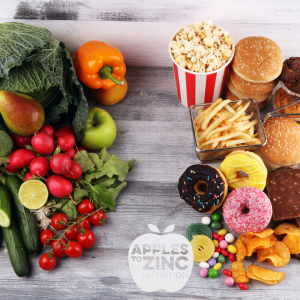
This is an area where I think parents are increasingly being made to worry.
Children don't need a completely sugar-free diet and eating some cake, biscuits, sweets or ice cream doesn't make their overall diet unhealthy.
We do want to be mindful of how much free sugar children consume, particularly because of its relationship with dental health, but it's the overall pattern of their diet that I'm interested in.
The same applies to ultra-processed foods.
There's increasing research into diets high in ultra-processed foods and health, and it's an area worth paying attention to. But the definition of UPF also captures plenty of useful everyday foods that families may rely on – including some breads, breakfast cereals and yoghurts.
Convenience has a place in family life.
Rather than trying to achieve an impossibly "clean" diet, think about the balance. Are convenience foods sitting alongside plenty of more nutritious foods, or are they beginning to crowd them out?
Those are very different situations.
Don't forget fibre and your child's gut
Fibre is another important part of children's nutrition and something that can easily be overlooked.
We find fibre in foods such as fruit, vegetables, wholegrains, beans, lentils, nuts and seeds. Different types of fibre support bowel health and provide food for the huge community of microorganisms living within the gut.
Eating a variety of plant foods can therefore be useful for both increasing fibre and supporting a diverse gut microbiome.
Again, this doesn't need to become another target to obsess over. Simply increasing the number and variety of plant foods appearing across the week can be a useful place to start.
Children's health isn't only about food

One of the things I often talk about with clients is that nutrition doesn't exist in isolation.
Sleep, movement, time outdoors, stress and daily routines can all influence how we feel – and that's just as relevant for children.
Sleep is particularly important during childhood. It supports physical and emotional wellbeing, learning and development, and appetite regulation.
Movement matters too, but it doesn't have to mean organised sport. Running around the park, cycling, swimming, dancing, walking the dog and playing outside all count.
Ideally, these are simply normal parts of childhood rather than things children feel they have to do to be healthy.
Appetites change – and that's normal
One thing that can be particularly confusing for parents is just how much a child's appetite can change.
A child who seems ravenous one week might barely appear interested in food the next. Growth spurts, activity, sleep, illness and developmental stages can all affect appetite.
Children's bodies also naturally change as they grow and particularly as they approach puberty.
For that reason, I think it's useful for conversations around food to focus predominantly on health, nourishment, energy, strength and what our bodies need to do all the amazing things we ask of them.
If you are concerned about your child's growth or weight, it's worth speaking to your GP, health visitor, school nurse or another appropriately qualified healthcare professional rather than making significant changes to their diet yourself.
When might your child benefit from nutritional support?
Sometimes you simply want some reassurance that what your child is eating is providing what they need.
At other times, there may be something more specific going on.
Perhaps their diet has become increasingly limited, you're concerned about whether they're getting enough of certain nutrients, they've developed digestive problems or seem unusually tired.
There may also be additional considerations if your child follows a vegetarian, vegan or dairy-free diet, has allergies or intolerances, is particularly active, or has other health needs that affect what they eat.
And sometimes parents simply reach a point where they've read so much conflicting information that they don't know what to believe anymore.
That's where taking a step back and looking at the individual child rather than another generic list of nutrition rules can be particularly useful.
Supporting your child's nutrition
Feeding children can sometimes feel surprisingly complicated.
Nutritional therapy isn't about expecting your child to eat a perfect diet or giving you another long list of things you should be doing.
When I work with children and their families, I look at what they're currently eating, their health, lifestyle, individual nutritional needs and any particular concerns you have.
We can then identify where nutritional or lifestyle changes might be useful and, importantly, how those changes can realistically work within family life.
Because ultimately, nourishing children shouldn't be about perfection.
It's about giving their growing bodies what they need while helping food remain a normal, enjoyable part of life.
If you're concerned about your child's nutrition or would simply like to understand whether nutritional therapy might be appropriate, you're very welcome to book a free, no-obligation discovery call.
It's a relaxed opportunity to tell me a little about what's going on and explore whether working together might be right for your child and your family.
Janet x