When we think about stress, we usually think about work, family or life pressures.
But what about food and stress?
Have you ever considered that what you’re eating might actually be adding to your stress levels?
Not in a guilt-driven way.
Not in a “perfect diet” way.
But in a very real, physiological way.
Because the relationship between food and stress is much closer than most people realise.
How Food and Stress Are Connected
When your body experiences stress, it activates a response designed to protect you.
This involves releasing hormones like adrenaline and cortisol.
Short term, this is helpful.
But the key thing to understand is this:
Your body responds to all types of stress in the same way.
That includes:
- Emotional stress
- Poor sleep
- Over-exercising
- And importantly… food-related stress
This is where the link between food and stress becomes important.
Certain foods — and eating patterns — can increase the overall stress load on your body.
What Is “Food Stress”?
Food stress refers to the way certain foods or eating habits can put additional strain on your body.
This can include:
- Blood sugar spikes and crashes
- Highly processed foods
- Too much caffeine or alcohol
- Eating too much or too little
- Irregular eating patterns
Individually, these might not seem significant.
But over time, they contribute to the overall relationship between food and stress, and how your body copes day to day.
How Food Stress Affects Your Body
When food is adding to your stress load, it can start to affect multiple systems.
You might notice:
- Lower energy levels
- Poor sleep
- More cravings (especially sugar)
- Digestive symptoms like bloating
- Mood changes or irritability
This is because food and stress both influence blood sugar, hormones and inflammation.
Foods That Can Increase Stress
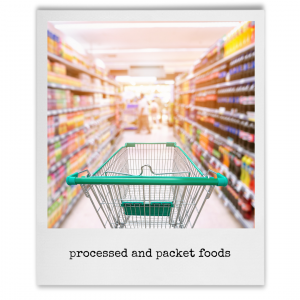
There are several foods on my hit list but the number one food stress is sugar!
1. SUGAR & REFINED CARBOHYDRATES:
It is not just the cakes, cookies, and chocolate though – all foods that break down to glucose quickly need to be eaten in moderation. This is because a spike in glucose is a big stress on the body and it must make insulin to rebalance levels. This can then have a knock-on effect on other hormones and imbalance those.
This means white pasta, white rice, packet bread, mash potatoes and tropical fruits can be eaten, but in moderation. The sweets, chocolates, cakes and ice cream need to be much more restricted. You can still enjoy slow release carbs such as wholegrain rice, jacket sweet potatoes, oats and all vegetables and low sugar fruits!
2. ULTRA PROCESSED FOODS:
These foods often do not have a lot of real foods in them and instead have lots of stabilisers, emulsifiers, preservatives, colourings and flavourings to keep them cheap and help them last longer. These added chemicals make the body work harder to clear them out. They are often high in trans or saturated fats too, which the body will want to store. They link to weight gain, inflammation and mood disorders and the body gets quite stressed when we eat them. If you want to learn more about which foods to avoid and some simple swaps then my self guided "Quitting UPFs" course is perfect for you
3. TOO MUCH OR TOO LITTLE FOOD:
A bit like Goldilocks we should aim to not have too much or too little food. We need it to be just right. If we consume too many calories our body must work hard to process and store the excess which means it is not working in the best way. If we eat too little the body may have to break down muscle and bones to get the nutrients it needs. Eating 3 meals a day each with some lean protein, a little carb and half a plate of vegetables is a great way of ensuring about the right amount.
4. CAFFEINE & ALCOHOL:
Both caffeine and alcohol also increase stress. They impact sleep negatively and they are stimulants and therefore, whilst not a direct food stress, do need to be reduced if you are looking to de-stress your body
Foods That Support Stress
The goal isn’t perfection.
It’s about supporting your body so it can better manage stress.
My top 3 food categories to consider are
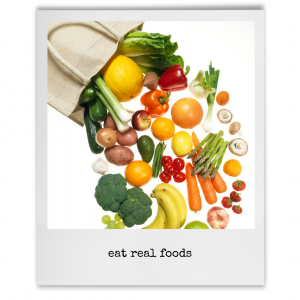
1. FRUITS & VEG:
These contain a lot of the nutrients our body’s need to work more optimally. They also naturally have high levels of vitamin C. Vitamin C is utilised a lot in the stress response and so it is important that we replenish it. We should aim to eat at least 6 portions of vegetables and 2 portions of fruits each day. For more info read this blog
2. LEAN QUALITY PROTEIN:
Protein helps:
- Stabilise blood sugar
- Support hormone production
- Maintain energy levels
Great sources of proteins are meat, fish, eggs, dairy, beans and pulses
3. FOODS RICH IN MAGNESIUM:
Magnesium supports:
- Muscle relaxation
- Nervous system function
- Stress resilience
Magnesium is found in nuts and seeds, beans and pulses, fish, Dark chocolate (yay!) and green leafy vegetables
Simple Ways to Improve the Balance Between Food and Stress
It can feel overwhelming to make a lot of changes to your eating and might even feel like it would increase your stress. But I promise you, you don’t need to change everything at once.
Start small:
✔ Eat regular, balanced meals
✔ Include protein with meals
✔ Reduce highly processed foods and sugar rich foods
✔ Swap one coffee for a herbal tea
✔ Add more vegetables to your day
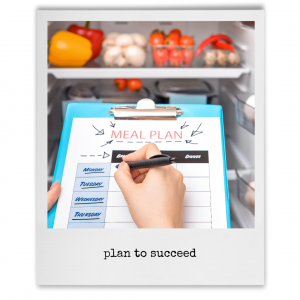
✔ Try to meal plan
These small steps can significantly improve how food and stress interact in your body.
If You’d Like Support
If you’re feeling tired, craving sugar or just not quite yourself…
It might not just be life stress.
It could also be how food and stress are interacting in your body.
And when you start to support that relationship, things can begin to feel more stable.
If you’d like help understanding how your eating habits might be affecting your stress levels — and what to change in a way that works for you — I offer a free, no-obligation call.
Janet ❤️