Thyroid Health and Nutrition – What you need to know
Thyroid Health and Nutrition: What Women Need to Know
Feeling tired, struggling with your weight, feeling cold, noticing changes to your periods or finding your concentration isn't what it used to be?
It's very easy – particularly for women in their 40s and 50s – to put symptoms like these down to stress, getting older or perimenopause.
But sometimes your thyroid health needs investigating too.
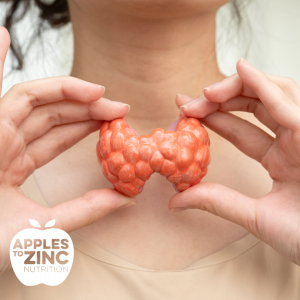
The thyroid is a small, butterfly-shaped gland in your neck, but don't let its size fool you. The hormones it produces influence your metabolism and affect everything from your energy and body temperature to your heart rate and digestion.
So where does nutrition for thyroid health fit in – and are there really foods you should eat or avoid?
Let's make sense of it.
What Does Your Thyroid Actually Do?
 I like to think of the thyroid as one of the body's energy managers.
Your brain and pituitary gland communicate with your thyroid using thyroid-stimulating hormone (TSH). Your thyroid then produces predominantly T4 and a smaller amount of T3.
T4 is largely a storage or "prohormone" form. Around the body, enzymes called deiodinases convert T4 into T3, the more biologically active thyroid hormone.
If your thyroid doesn't produce enough thyroid hormone, this is known as hypothyroidism or an underactive thyroid.
And because thyroid hormones influence so many systems, the symptoms can be surprisingly varied.
Symptoms Of An Underactive Thyroid
Symptoms can include feeling unusually tired or cold, weight gain, constipation, difficulty concentrating or brain fog, low mood, dry skin, hair loss, muscle aches or weakness and heavy or irregular periods.
The tricky bit for women is that several of these symptoms can also occur during perimenopause and menopause.
Fatigue, weight changes, brain fog, low mood and period changes could have several possible causes, which is why I wouldn't automatically assume that every symptom in your 40s or 50s is "just hormones".
If you have persistent symptoms, speak to your GP. Hypothyroidism is diagnosed using blood tests, usually including TSH and T4.
Why Do Thyroid Problems Develop?
There isn't one single cause.
In the UK, the most common cause of an underactive thyroid is Hashimoto's disease, an autoimmune condition in which the immune system attacks the thyroid gland.
Hypothyroidism can also occur following thyroid surgery or treatment for an overactive thyroid, because of certain medications or, less commonly in the UK, because of iodine deficiency.
So while nutrition can absolutely support normal thyroid function and overall health, it's important to be clear:
There isn't a special diet that can treat an underactive thyroid.
If you've been diagnosed with hypothyroidism, the standard treatment is usually thyroid hormone replacement with levothyroxine.
Nutrition works alongside appropriate medical care – not instead of it.
Nutrition For Thyroid Health: What Actually Matters?
This is an area where there's an enormous amount of misinformation online.
You'll find lists of "thyroid superfoods", foods you're apparently never allowed to eat and supplements promising to "boost" your thyroid.
For most women, it's much less complicated.
A varied diet provides the nutrients needed for normal thyroid hormone production and metabolism. There are, however, a few nutrients particularly worth knowing about.
Iodine and Thyroid Health
Your thyroid needs iodine to make thyroid hormones.
Good UK food sources include fish, dairy products and eggs.
But more iodine is not necessarily better.
If you already have a thyroid condition, taking high-dose iodine or kelp supplements can potentially make thyroid problems worse. The British Thyroid Foundation advises that people taking levothyroxine don't need additional iodine supplementation simply because they have hypothyroidism.
So I wouldn't reach for seaweed or an iodine supplement because you've read that it's "good for your thyroid".
If you eat very little or no dairy, eggs or fish – perhaps because you follow a vegan diet – your iodine intake is something worth considering with an appropriately qualified professional.
Selenium and Thyroid Health
Selenium is particularly interesting because the enzymes involved in converting T4 into active T3 are selenium-containing enzymes.
Food sources include fish, eggs, meat, beans, lentils and Brazil nuts.
Again, though, more isn't automatically better.
You don't need handfuls of Brazil nuts or a high-dose selenium supplement because you have a thyroid condition. Selenium deficiency can affect thyroid hormone metabolism, but supplementation hasn't been shown to be universally beneficial for everyone with hypothyroidism.
This is a good example of why I prefer a food-first approach unless there's a clear reason to supplement.
Iron Really Does Matter for Your Thyroid
Iron isn't just relevant because low iron can make you tired.
Your thyroid actually needs iron to make thyroid hormones.
An enzyme called thyroid peroxidase (TPO) is involved in the production of T4 and T3, and it depends on iron to function normally. Iron deficiency can therefore interfere with normal thyroid hormone synthesis.
This is particularly relevant for women who have heavy periods, because they're more vulnerable to developing low iron stores.
It's also another reason not to assume that tiredness, hair loss or feeling cold must have one single explanation. Low iron and an underactive thyroid can produce some very similar symptoms – and sometimes both need investigating.
One practical point: iron supplements can interfere with the absorption of levothyroxine, so they usually need to be taken several hours apart.
What About Broccoli and Other 'Goitrogenic' Foods?
This is one thyroid myth that needs some context.
Cruciferous vegetables such as broccoli, cabbage, cauliflower and kale contain naturally occurring compounds that can interfere with the way the thyroid uses iodine – which is where the advice to avoid them if you have hypothyroidism originally came from.
Cooking reduces the activity of these compounds, so cooked cruciferous vegetables are even less of a concern.
But does that mean you can't eat raw broccoli or kale if you have an underactive thyroid?
For most women, no.
Normal portions are unlikely to cause problems, particularly if your iodine intake is adequate. The concern is much more relevant to consuming unusually large quantities – for example, regularly drinking huge raw kale smoothies – alongside inadequate iodine.
So I wouldn't tell someone with hypothyroidism to stop eating broccoli.
These vegetables provide fibre and a huge range of useful plant nutrients. Enjoy them cooked regularly and don't panic about having a little raw sometimes either.
That's a much more sensible approach than adding another unnecessary food restriction.
Stress, T4 & T3 - Is There A Connection?
 Yes – although this is another area where we need to avoid oversimplifying the science.
Remember that your thyroid produces predominantly T4, which then needs to be converted around the body into the more active T3.
That conversion is influenced by your wider physiological environment.
Research suggests that chronic stress and elevated cortisol can affect the communication between the brain and thyroid and influence the deiodinase enzymes involved in thyroid hormone metabolism. Severe illness, significant calorie restriction and sleep deprivation can also alter thyroid hormone regulation.
This doesn't mean:
"I'm stressed, therefore I'm not converting T4 to T3 properly."
And stress isn't a substitute explanation for a diagnosed thyroid condition.
But it does remind us that the thyroid doesn't operate independently from the rest of the body.
And when I talk about "stress", I don't just mean feeling emotionally overwhelmed.
Your overall physiological load can include poor sleep, consistently under-eating, over-exercising, illness and ongoing psychological stress. These are all signals the body has to respond and adapt to.
This is one of the reasons I look beyond food alone when working with women.
Good nutrition matters – but so do sleep, recovery, movement, stress and eating enough to meet your body's needs.
Do you Need A Special Thyroid Diet?
Usually, no.
The British Thyroid Foundation doesn't recommend a specific "thyroid diet" for people diagnosed with thyroid disease.
Instead, think about the foundations.
Eat a varied diet that provides appropriate amounts of iodine, selenium and iron. Include plenty of vegetables, fruit and fibre, good-quality sources of protein and healthy fats, and avoid unnecessarily restricting whole groups of nutritious foods because you've read that they're "bad for your thyroid".
And be cautious with supplements promising to "support" or "boost" thyroid function.
More isn't necessarily better – particularly when it comes to iodine and selenium.
What If You Take Levothyroxine Already?
Food and supplement timing can matter because some things can interfere with the absorption of levothyroxine.
Calcium, iron and soya are particularly worth being aware of. Follow the instructions provided with your medication and speak to your pharmacist or GP if you're unsure about timings.
Or read more on the British Thyroid Foundation Site
Thyroid Health Isn't Just About Your Thyroid
If you're tired, struggling with your weight or simply don't feel like yourself, it's tempting to search for one explanation.
"My thyroid must be slow."
"My hormones are out of balance."
"It must be menopause."
But our bodies don't work in isolated compartments.
Thyroid function, reproductive hormones, iron status, nutrition, sleep, stress and metabolic health can all influence how we feel – and sometimes several things are happening at once.
That's particularly important for women during perimenopause, when thyroid and menopausal symptoms can overlap.
What This Means for You
 If you have a diagnosed thyroid condition, you don't need a restrictive "thyroid diet".
And you certainly don't need to eliminate nutritious foods such as broccoli or start taking handfuls of supplements.
Instead, focus on getting the foundations right and make sure persistent symptoms are properly investigated.
If you're experiencing ongoing fatigue, unexplained weight changes, feeling unusually cold, hair loss, heavy periods or brain fog, speak to your GP rather than assuming it's simply something you have to put up with.
And if you've already had medical investigations but still feel that your nutrition, lifestyle or wider women's health needs some attention, you're very welcome to book a free, no-obligation call with me.
We'll have a relaxed conversation about what's been going on, what you'd like to achieve and whether nutritional therapy could be an appropriate part of your support.
Janet x